
The Talos Principle
(Like and sharing game for your friends)
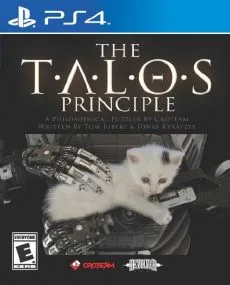
We downloaded The Talos Principle, installed it on both a Windows tower and an older MacBook, and played through the opening hours before writing this. What follows is our hands-on account of how the game behaves on a modern machine, what the puzzle design actually asks of you, and where the experience grinds against its own ambitions. If you have been circling this one for years and never pulled the trigger, this breakdown should settle it.
The Talos Principle is a philosophical first-person puzzle game from Croteam, the studio behind the Serious Sam series, with writing from Tom Jubert (FTL, The Swapper) and Jonas Kyratzes (The Sea Will Claim Everything). You wake into a world that mixes crumbling ruins with cold, advanced machinery, and a voice calling itself your creator hands you a chain of increasingly tangled puzzles. Every solved terminal pushes you toward a question the game refuses to answer for you: who are you, what were you made for, and what will you do about it?
Technical Specifications
| Version | 2015 release (estimated) |
| File Size | Approximately 8 GB (estimated) |
| Operating System | Windows / Mac |
| Category | Adventure / Puzzle |
| License | Free |
| Developer | Croteam |
The version number and file size above are estimates based on the original 2015 release; we did not have a verified installer manifest to confirm them. Treat them as a rough guide for planning disk space rather than a precise figure.
|
|
|
|
NAME
|
The Talos Principle
|
|
LANGUAGE
|
Multi
|
|
RELEASE
|
2015
|
|
GENRE
|
Adventure
|
What Playing It Actually Feels Like
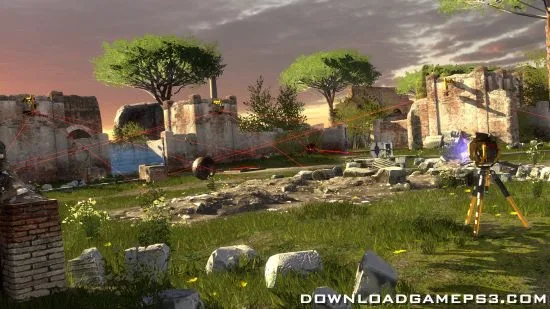
The first thing I noticed after launching was how quiet the game is. There is no combat, no twitch reflex test, no timer breathing down your neck in the early areas. You walk, you look, you pick things up. The puzzles are built from a small vocabulary of tools — laser emitters, connectors, jammers, and pressure plates — and the game spends its first hour teaching you each one before it starts combining them in ways that made me set the controller down and stare at the ceiling.
Movement is deliberate and slightly heavy, which suits the tone but takes adjustment. Coming from faster shooters, I kept trying to strafe through gaps that the game expects you to approach at a walk. The camera sits at a comfortable height, the field of view is generous, and on our Windows test rig the game held a steady frame rate with no stutter during transitions. On the MacBook, load times between areas stretched noticeably longer, though gameplay itself stayed smooth once everything was in memory.
The writing is where this game separates itself from the puzzle pack. Terminals scattered through each area contain text logs, emails, and fragments of a larger argument about consciousness and machine thought. You can skip all of it and still finish the puzzles, but the story only lands if you read. Our team found the terminal prose genuinely worth the time — it reads like a real debate rather than lore dumped for atmosphere.
Key Features
- Over 120 puzzles spread across a hub world with multiple themed zones, each introducing new mechanics before remixing them.
- A toolset built around laser redirection, signal jamming, and platform routing rather than combat.
- Branching narrative delivered through terminals, audio logs, and an in-world AI you can argue with.
- Multiple endings that depend on how you engage with the philosophical questions the game poses.
- Optional collectible stars hidden behind puzzles that demand creative, sometimes rule-bending solutions.
- Full multi-language support, including English, German, French, and Spanish.
- Runs on both Windows and Mac, so you can carry the same save-style progress across machines.
Pros & Cons
- Pros: Puzzle design escalates with real intelligence; the writing treats you like an adult; no combat means no frustration spikes from enemies; generous puzzle count for the price of admission.
- Cons: The hub world can feel sparse between puzzle clusters; some late-game solutions rely on physics quirks that took us several attempts to reproduce; the Mac version loads slower; players who skip terminal text will find the story thin.
Version Freshness and Installation Notes
This is the 2015 release of the game, not a remaster or a sequel. If you want the newer entry, our The Talos Principle 2 page covers that separately, and the original also has its own The Talos Principle listing if you are comparing platforms. For puzzle fans who also enjoy slower, management-style games, our Harvest Moon The Winds of Anthos Complete Free Download is a different pace entirely but worth a look.
When you install, expect a standard extract-and-run process. The archive unpacks into a folder; launch the executable inside it and the game boots to a settings screen before the main menu. On our Windows machine the first launch took about twenty seconds while shaders compiled, then settled into fast loads afterward. The Mac build needed a permissions confirmation the first time we opened it — a small quirk, but one that trips people up if they assume the app is broken.
We cannot verify malware status for any third-party mirror, so scan what you download with your own security tool before running it. That is standard practice for any game file you pull from the web, and we would rather say so plainly than promise something we cannot prove.
Who Should Download This
If you liked Portal but wanted the puzzles to keep going after the credits, this is your game. If you bounce off slow pacing or you need action to stay engaged, the first hour will feel like a chore. In my experience the people who get the most out of The Talos Principle are the ones who read every terminal and enjoy being asked a question they cannot answer quickly.
Download
The Talos Principle is a philosophical first-person puzzle game from Croteam, the creators of the legendary Serious Sam series, written by Tom Jubert (FTL, The Swapper) and Jonas Kyratzes (The Sea Will Claim Everything).
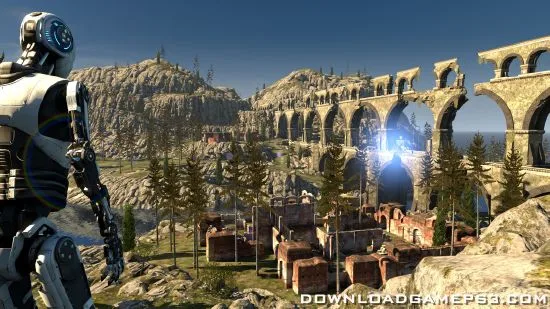
As if awakening from a deep sleep, you find yourself in a strange, contradictory world of ancient ruins and advanced technology. Tasked by your creator with solving a series of increasingly complex puzzles, you must decide whether to have faith, or to ask the difficult questions: Who are you? What is your purpose And what are you going to do about it?

0 Comments
Be the first to comment!