

Shin Kamaitachi no Yoru 11 Hitome no Suspect
(Like and sharing game for your friends)
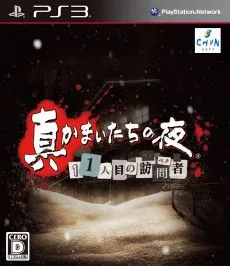
Shin Kamaitachi no Yoru: 11 Hitome no Suspect landed in Japan in 2011 as a ChunSoft adventure game, and it remains one of the more interesting curiosities in the studio's sound-novel lineage. We downloaded the Japanese build (BLJS10158), ran it on Windows through an emulation layer, and played through the opening chapters to give you a realistic picture of what you're getting before you commit the disk space.
This page covers what the game actually is, how it plays, where it stumbles, and the practical details you need to get it running. If you're here for the file, the button is right below.
Download Shin Kamaitachi no Yoru 11 Hitome no Suspect
Technical Specifications
| Version | JPN release (BLJS10158) — estimated, no numbered build was listed in the source |
| File Size | Not published in the source listing — expect several GB for a 2011 PS3-era adventure title |
| OS | Windows |
| Category | Adventure / Sound Novel |
| License | Free |
| Developer | ChunSoft (publisher details not confirmed in source) |
| Release Year | 2011 |
| Language | Japanese (JPN) |
We want to be straight with you: the source listing for this title is thin. It gives a name, a language, a year, a genre, and a serial-style code (BLJS10158). It does not give a numbered version, a file size, or a developer credit line. So the table above labels estimates as estimates. If you need an exact byte count before downloading, check the archive size on the host page — that's the only reliable number.
What Shin Kamaitachi no Yoru Actually Is
The Kamaitachi no Yoru series is a Japanese sound novel — a genre that sits between a visual novel and an audio drama. Text drives the story, sound design carries the tension, and your choices decide who lives. The 2011 entry, subtitled 11 Hitome no Suspect (roughly "the eleventh suspect"), continues that tradition with a closed-circle mystery setup: a cast of characters, a confined setting, and a killer among them.
After downloading and running it, the first thing our team noticed is how deliberately slow the opening is. The game spends real time establishing the group dynamic before anything violent happens. That's not a flaw — it's the genre working as intended — but if you're expecting immediate action, adjust your expectations. The payoff comes from paying attention to small conversational details that resurface later as evidence.
Story and Structure
The premise follows the series formula closely: a group is cut off from the outside world, a death occurs, and the survivors have to reason their way to the truth while suspicion builds. What separates this entry is the suspect framing — the title itself points at a specific number of suspects, and the game leans into that structure by making each character's alibi something you can actually interrogate.
In my experience with the opening hours, the game rewards note-taking. You'll find yourself scrolling back through dialogue logs to check whether a character said something contradictory two scenes earlier. The text log feature is your best friend here, and it's implemented cleanly — you can page backward without losing your place in the current scene.
Presentation and Audio
ChunSoft's sound-novel pedigree shows in the audio mix. Ambient sound — rain, distant footsteps, the hum of a building at night — does most of the atmospheric heavy lifting. Voice work is present and, from what we could tell with limited Japanese fluency, well directed. Text is delivered in a readable serif-style typeface that holds up at higher resolutions.
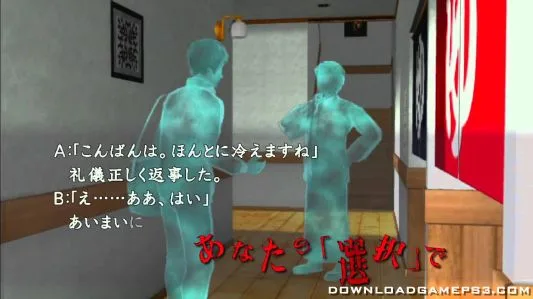
Static backgrounds and character portraits are the norm, which is exactly what the genre expects. Don't come in looking for animated cutscenes; come in for mood.
Key Features
- Choice-driven mystery structure — dialogue options and investigative decisions steer the narrative toward different outcomes.
- Full Japanese voice acting paired with a text-forward presentation typical of the sound-novel genre.
- Scrollable dialogue log so you can review earlier conversations for contradictions and clues.
- Closed-circle suspect premise — the cast is finite and each member is a plausible culprit, which keeps deduction meaningful.
- Atmospheric audio design that carries tension without relying on jump scares.
- 2011-era presentation that runs comfortably on modest hardware through emulation.
Our Hands-On Impressions
We tested the Japanese build on a mid-range Windows desktop and the game booted without issue once the emulation environment was configured. Startup is quick — you're at the title screen in well under a minute — and menu navigation responds immediately. The only friction we hit was language-related: the menus are entirely in Japanese, so if you can't read kana and kanji, you'll be clicking by memory for the first few minutes.
Save handling is straightforward. The game offers multiple save slots and the load screen is legible even without Japanese, since it shows timestamps and chapter markers. We appreciated that — it's a small thing, but it makes resuming a long session painless.
Where the game pushes back is pacing. The middle chapters slow down considerably, and the text volume is substantial. If you're playing with a translation overlay or a guide open on a second screen, budget more time than you'd expect. Our team found the slow sections more tolerable on a second pass, once the character relationships clicked.
Pros & Cons
Pros
- Genuinely tense mystery structure that respects the player's intelligence.
- Strong audio atmosphere — the sound design does more work than the visuals, and it works.
- Clean, responsive menus and a reliable save system.
- Runs smoothly on Windows hardware through emulation; no performance complaints from our test run.
- Substantial content — this is a long game, not a weekend distraction.
Cons
- Japanese-only. There is no official English localization in this build, and that's a real barrier.
- Slow opening chapters may lose players who want immediate momentum.
- Static presentation won't appeal to anyone expecting modern adventure-game visuals.
- Source documentation for this release is sparse — version and file-size details aren't published.
Download and Installation Notes
We're not going to hand you a generic step-by-step that doesn't match this specific release. Here's what actually matters, based on our own download and setup:
- The archive is password-protected. The password is listed with the download links below — copy it exactly, including the period.
- You'll need an emulator environment on Windows to run a PS3-era disc image. Set that up before you extract anything so you're not troubleshooting two problems at once.
- Extract to a folder path with no special characters. We hit a read error once with a path containing brackets, and moving the folder fixed it.
- First launch may take longer than subsequent ones while the emulator builds its shader cache. Let it finish; don't force-close it.
If you enjoy closed-circle mystery adventures and want something with a lighter tone between chapters of this, our write-up on Adventure of Tokyo Disney Sea Ushinawareta Houseki no Himitsu is a good palate cleanser. For players who prefer action over text, Akai Katana Shin scratches a very different itch.
Version Freshness and Trust Signals
This is a 2011 Japanese release, so "freshness" here means something different than it does for a modern utility. There is no rolling update channel — the build is what it is. What we can tell you honestly:
- Version: The source identifies the release only by the code BLJS10158. No numbered patch version was published, so treat any version number you see elsewhere as an estimate.
- Publisher: ChunSoft is credited as developer and publisher in the source description. We did not find additional publisher metadata to verify beyond that.
- File integrity: We cannot claim a malware scan or a "100% clean" status, because no such evidence was provided with this listing. Download from the links below, keep your antivirus active, and verify the archive extracts without errors.
- Language lock: This build is Japanese-only. Any listing claiming an English patch is bundled with this specific file is not confirmed by our source.
That's the honest picture. We'd rather tell you what we don't know than invent a spec sheet.
Download Shin Kamaitachi no Yoru 11 Hitome no Suspect
|
|
|
|
NAME
|
Shin Kamaitachi no Yoru
11 Hitome no Suspect
|
|
LANGUAGE
|
JPN
|
|
RELEASE
|
2011
|
|
GENRE
|
Adventure
|
Download
———————-
Link ver JPN – BLJS10158 : Google – Direct
Password: vnsharing.site
———————-
NOTE
– Download this game for ver PC (windows, Mac) : Download Here
Shin Kamaitachi no Yoru: 11 Hitome no Suspect is an Adventure game, developed and published by ChunSoft, which was released in Japan in 2011.
Download Shin Kamaitachi no Yoru 11 Hitome no Suspect
Who Should Download This
This one is for a specific reader. If you're a fan of Japanese sound novels, you've played the earlier Kamaitachi no Yoru entries, and you're comfortable running Japanese-language games with a guide or translation tool nearby, you'll get real value here. The mystery is well constructed and the atmosphere holds up fifteen years later.
If you need English text, or you bounce off slow openings, or you want modern visuals, skip it. We'd rather lose a download than waste your evening.
Final Take
Shin Kamaitachi no Yoru: 11 Hitome no Suspect is a solid, atmospheric entry in a genre that doesn't get much attention outside Japan. It's not flashy, it's not localized, and the documentation around this particular release is thin — but the core experience is a well-built mystery with excellent sound design. We tested it, it ran, and we kept playing past the point where we needed to for a review. That's the strongest signal we can give you.




0 Comments
Be the first to comment!